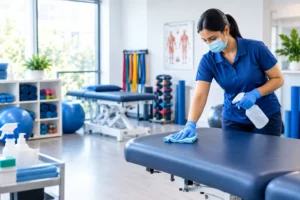
Physiotherapy and rehabilitation clinics are designed to help patients recover, regain mobility and improve their quality of life. But because these environments are used by multiple patients, clinicians and support staff throughout the day, maintaining consistent environmental hygiene is also an important part of creating a safe care setting.
From treatment tables and exercise equipment to door handles, chairs and other frequently touched surfaces, many areas within a rehabilitation clinic can be contacted repeatedly by different people. A structured approach to cleaning and hygiene can therefore help reduce avoidable hygiene risks and support a more consistent clinical environment.
High-Touch Areas Require Particular Attention
Not every surface within a rehabilitation facility is exposed to the same level of contact. High-touch areas such as treatment surfaces, therapy equipment, handrails, door handles, switches and shared furniture may require particular attention as part of a routine cleaning programme.
Cleaning procedures should identify these areas and establish clear expectations for how frequently they should be cleaned and, where appropriate, disinfected.
Cleaning Should Be Consistent and Evidence-Based
A reliable cleaning programme is more than simply making a clinic look clean. Staff should understand what needs to be cleaned, which products and methods are appropriate, and how cleaning quality is checked.
An evidence-based cleaning methodology can help healthcare and rehabilitation facilities establish consistent processes, reduce variation between cleaning staff and support better hygiene outcomes.
This approach can include:
- Clearly defined cleaning procedures
- Appropriate product selection and usage
- Particular attention to high-touch surfaces
- Regular cleaning of shared treatment and rehabilitation areas
- Staff training and competency
- Routine quality checks
- Documentation and continuous improvement
Hygiene Around Shared Rehabilitation Equipment
Physiotherapy clinics often use equipment that is shared between patients. Depending on the type of equipment and its intended use, appropriate cleaning procedures should be incorporated into the clinic’s routine.
Equipment such as treatment tables, exercise machines, therapy accessories and other shared items should be maintained according to manufacturer guidance and the facility’s infection-prevention procedures.
This is particularly important where equipment comes into direct contact with patients.
Cleaning Quality Should Be Measurable
One challenge with conventional cleaning is that visual appearance alone does not always demonstrate whether cleaning has been effective.
Healthcare-inspired cleaning programmes can incorporate quality verification methods to assess whether cleaning standards are being consistently achieved. Regular audits and documented checks can help identify areas requiring improvement and provide a more structured approach to maintaining hygiene standards.
Creating a Culture of Continuous Improvement
Environmental hygiene should not be viewed as a one-time task. Rehabilitation facilities can benefit from reviewing their cleaning procedures regularly and identifying opportunities to improve them.
This may involve assessing the facility, identifying higher-risk or high-touch areas, reviewing cleaning procedures, training staff and periodically verifying cleaning quality.
A structured methodology can help turn cleaning from a routine task into a more consistent and measurable part of facility management.
The Role of Healthcare-Inspired Cleaning Methodologies
For healthcare and rehabilitation environments, evidence-based cleaning methodologies can provide a framework for establishing consistent cleaning standards while considering hygiene, safety, sustainability and quality assurance.
Conclusion
A clean rehabilitation environment supports the wider goal of providing safe, professional and patient-focused care. By combining appropriate cleaning procedures, staff training, attention to high-touch areas and regular quality verification, physiotherapy and rehabilitation facilities can establish more consistent environmental hygiene standards.